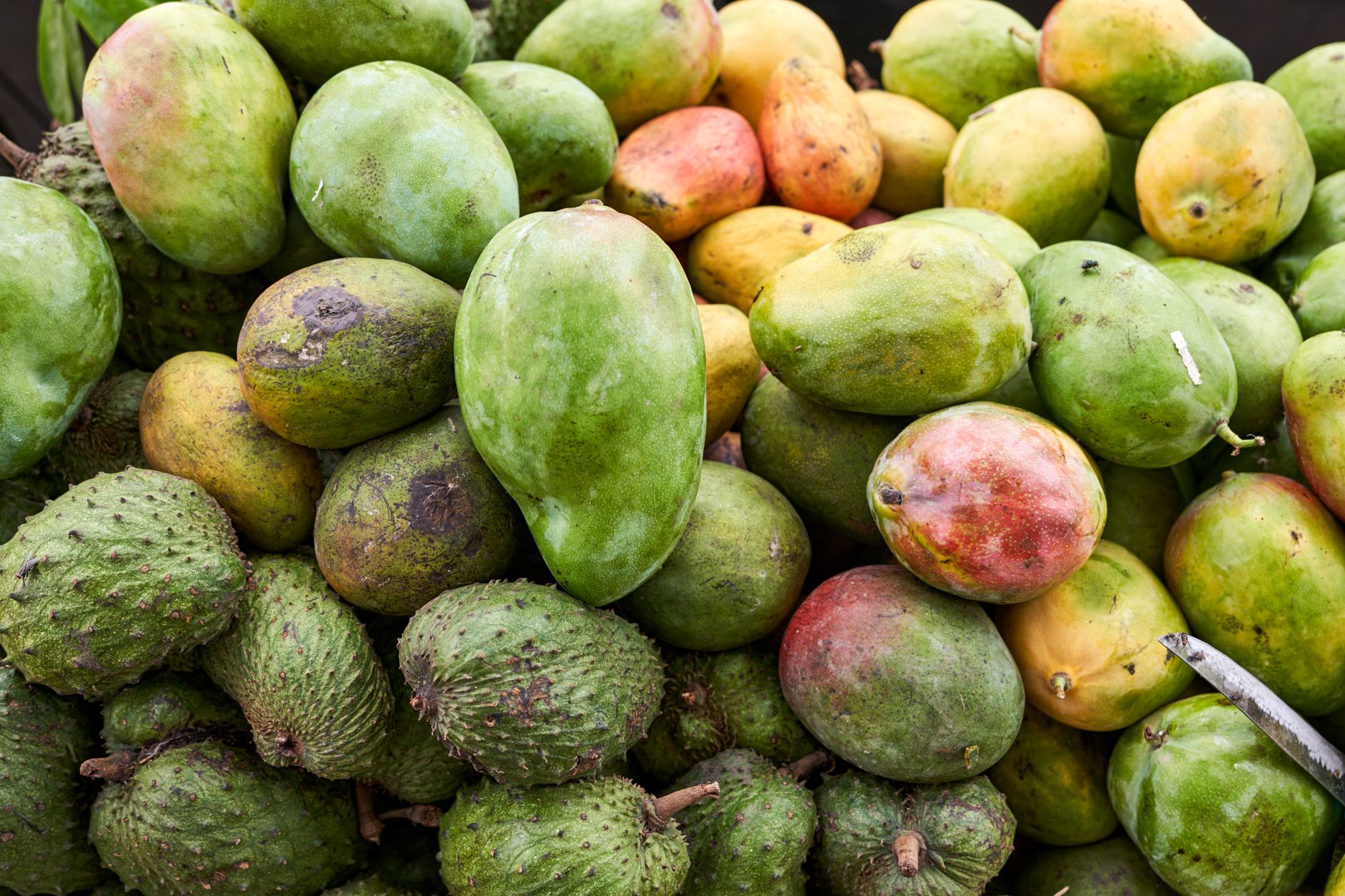
ALBUQUERQUE – The neurotoxic compound annonacin has caused much grief to enthusiasts of the family of fruit which has plentiful deposits of the compound, including soursop and the Appalachian’s own banana, the pawpaw. For generations, lovers of these fragrant, custard-textured fruits have enjoyed the fruit, yet, after recent concerns, enthusiasts live under the quiet anxiety of atypical Parkinsonian syndromes, worrying over the belief that the fruit’s substances were an botanical curse. However, multiple researchers show the compounds could be isolated, stripping the neurotoxin away in laboratory settings. Perhaps the promise of truly consequence-free soursop buffets were back on the horizon.
Yet the reality, when dragged out from beneath the actual contents of the papers, seem to offer little comfort to anyone hoping to taste a safe fruit. To Research on soursop is far more nuanced than simply labeling the fruit “poisonous”. Soursop naturally contains annonaceous acetogenins, a family of bioactive compounds that includes annonacin, and these compounds are found throughout the plant – but their concentrations vary widely.
They are most concentrated in the seeds and significantly lower in the edible pulp, peel, and core. While an average whole fruit is estimated to contain roughly 15 mg of annonacin, actual levels fluctuate depending on the cultivar, ripeness, and growing conditions. Furthermore, it is sadly fact that the actual toxicological concern around annonacin is grounded in biology: the compound inhibits mitochondrial complex I, effectively starving cells of energy in sufficient doses. In laboratory experiments, high exposures have proven neurotoxic: in rats, prolonged intravenous doses crossed the blood-brain barrier, depleted brain ATP, and caused measurable neuronal loss.
These studies confirm that the compound can cause harm, but animal injections do not tell us how much soursop a human can safely eat. Human evidence is suggestive, but not definitive, though in 1999, researchers in Guadeloupe observed that patients suffering from atypical parkinsonism reported unusually high consumption of soursop fruit and herbal teas. Subsequent research including a 2022 study and a 2026 comparison between Caribbean and mainland French cohorts has continued to link heavy lifetime consumption with more severe motor and cognitive decline.

However, these are observational studies, and confounding factors like genetics, unmeasured health conditions, and incomplete exposure histories mean researchers still cannot prove soursop was the direct cause. Furthermore, while analytical chemists routinely extract acetogenins in laboratories using solvents like chloroform, methanol, and ethyl acetate, these procedures are designed to isolate compounds for study, not to produce safe, edible food. Essentially, while you can remove the toxins, you will have much more bigger problems on your hands if your food has chloroform in it.
Thus, currently, there is no validated household or commercial method to selectively strip acetogenins from soursop pulp. Cooking is also not a proven fix, as a 2025 study found that conventional pasteurization and thermal processing left acetogenins intact in soursop beverages, proving mild heat does not destroy them.
Despite this disappointing setback, research has continued on this frontier. With removing water naturally increases the concentration of any heat-surviving compound by weight, scientists may figure out how different cooking times, temperatures, and pH levels alter annonacin. European food safety authorities, including Germany’s Federal Institute for Risk Assessment (BfR) and the EFSA, have expressed legitimate concern about the neurotoxic potential of the fruits, particularly from concentrated supplements and chronic, daily exposure. However, they concluded that current data is insufficient to define an official “safe” daily intake limit for humans.
Ultimately, the science calls for moderation rather than panic. Removing the seeds does not make the pulp entirely toxin-free, as measurable amounts remain in the flesh. However, there is no evidence that enjoying the fruit occasionally delivers a toxic dose, and no indication that a magic remover is on the horizon. Until further research clarifies how the human body absorbs and clears annonacin over time or breakthroughs in chemical removal occur, caution may be very well most warranted around daily consumption and concentrated products like soursop leaf teas and extracts.
Leave a Reply